
Let Your Dog Off the Lead: Safe Training
· 5 min read
Let your dog off the lead: what needs to work first
You want to let your dog off the lead, but how do you know whether it is sensible? There is no single birthday that makes off-lead walking safe. Watch whether your dog checks in with you outdoors, responds to their name and can leave an interesting smell when asked. Reliable recall is not an exam passed once. It is a skill that needs practising in many settings. Start in places where your dog already succeeds. A busy trail with wildlife and cyclists is not the right starting point for a dog who struggles with ordinary distractions.
The Swiss Federal Food Safety and Veterinary Office explains that dogs need appropriate exercise, activities and contact with people and, where possible, other dogs. The Animal Protection Ordinance also requires that dogs can move off the lead during their daily walks where possible. That does not mean you may let your dog off the lead everywhere: cantonal and municipal lead rules still apply. Safety, consideration for others and local rules still matter. For a young, anxious or strongly hunting-motivated dog, a secure enclosure can be an excellent training environment.
How to recognise readiness for off-lead walking
Think about several skills rather than a single command. Your dog should know a recall cue, look towards you voluntarily and recover calmly after brief excitement. Practise calling them back and then releasing them to explore again. Otherwise they may decide that coming to you always ends the fun. Observe their response in a familiar place before expecting the same behaviour somewhere new.
- Your dog regularly looks back towards you without being prompted.
- They respond to their recall cue in a calm place.
- They can turn away from a mild distraction.
- You can calmly touch them and clip the lead on.
- You have a safe way to regain control if something unexpected happens.
Do not judge readiness only in your kitchen or garden. A peaceful field can feel completely different when another dog, wildlife or a cyclist appears. For individual recall exercises, see training your dog's recall.
Training off the lead in manageable stages
Begin with an ordinary lead in a quiet, open area. Reward your dog for choosing to come closer and for responding quickly. When these foundations are dependable, practise on a long line attached to a suitable harness. The line gives your dog more freedom while allowing you to prevent an uncontrolled escape. It still needs careful handling around people and other animals to avoid tangles or sudden tension.
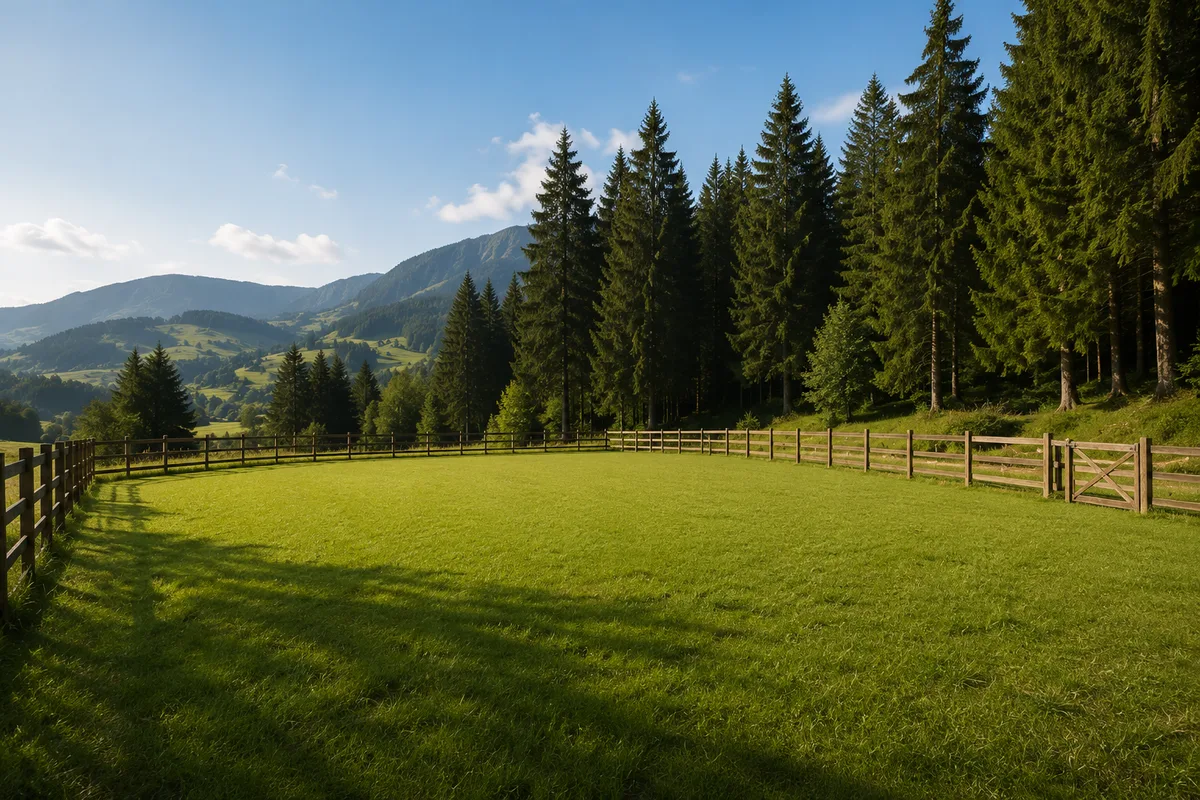
Next, use a properly secured enclosed field with no unfamiliar dogs and minimal distractions. Start with short recalls over an easy distance. Do not call continuously. Alternate between exploring, sniffing games and brief training moments. Add distractions deliberately, one at a time. Only consider an open location when local rules allow it and you can reliably manage your dog there. A secure field is a stage in training, not proof that an unfenced place is already safe.
What if your dog stops listening without the lead?
Avoid punishment and chasing your dog. Often the situation has become harder than the training prepared them for. Return to an earlier stage, shorten the distance and reintroduce a safe line. Repeating a recall word again and again while your dog is completely absorbed will not make the signal stronger. Instead, practise when they are able to respond and gradually build the difficulty.
Make returning worthwhile. Sometimes offer a reward; at other times allow another short sniff after you have greeted them. Notice which distractions are hardest. If movement or scent triggers a hunting response, read managing prey drive and freedom. Confidence alone is not a substitute for management. A useful plan combines realistic expectations, environmental control and repeated successful practice.
Walking to heel without a lead is a separate skill
Heelwork asks a dog to hold an agreed position for a short period. It is not the same as relaxed off-lead exploration. Teach the position on the lead first, then practise a few steps in a secure, quiet area. Reward accurate movement and use a clear release cue to end the exercise. Most everyday walks do not require continuous heelwork.
You can also encourage a dog to stay comfortably nearby without demanding that they remain glued to your leg. That voluntary orientation is valuable in its own right. If sudden movement is particularly tempting, consider the exercises in impulse control for dogs. Work on one goal at a time so both of you understand what success looks like.
Check safety and legal restrictions first
Before removing the lead, look at visibility, roads, grazing animals, possible wildlife and other visitors. Rules in woodland and at its edges vary by canton and season. In the Canton of Zurich, for example, dogs must be on the lead there from 1 April to 31 July, and the woodland edge covers an area up to 50 metres from the woodland. Good training does not override a lead requirement. Consult lead rules by Swiss canton. When visibility is poor or the surroundings are unpredictable, keeping the lead on is a responsible decision, not a failed lesson.
An enclosed field still requires supervision. Walk around the fence, check the gate, look for gaps and assess any obstacles before releasing your dog. Make sure the ground is suitable for running. Watch their body language and include breaks. If they seem uneasy, reduce the demands and let them explore at their own pace rather than insisting on another recall exercise.
Plan your next practice session
Choose a single objective, such as returning promptly from a small distraction. Begin with a situation where success is very likely. Practise a few good repetitions, take a break and finish on a positive note. Next time, change just one factor: perhaps a little more distance or a different smell, but not every difficulty at once.
Keep simple notes about what worked. Did you need to repeat the cue? Was a passing dog too challenging? That is useful feedback, not a reason to rush. Return to a stage your dog understands and progress from there. You can look for an enclosed field reserved for just you and your dog through our search.