
Dog with a strong prey drive: How off lead time can work
· 3 min read
One moment your dog is beside you. Then something moves at the edge of the field, their body tenses and their attention is somewhere else entirely. With dogs that are strongly motivated to chase, the wish for off lead freedom can quickly become a difficult balancing act.
More freedom needs a framework that suits your dog. That includes suitable safety measures, realistic expectations and activities you can shape together.
Can you train the prey drive out of a dog?
«Train prey drive out of dog» is an understandable search query. As a training promise, however, the wording is problematic. Hunting and chasing behaviour cannot be completely eliminated in every dog.
The goal is to prevent uncontrolled chasing and work on orientation and suitable alternatives. Dogs Trust explicitly points out that even trained dogs may still chase in certain situations. The specialist guide to chasing behaviour recommends, among other things, appropriate safety measures and careful choice of walking locations.
Not every moving object presents the same challenge
For a few walks, note what your dog reacts to. Is it birds on the ground, wildlife scents, running dogs or bicycles? These observations can help a professional assess the behaviour. They are not a diagnosis.
They are already useful when choosing a field. A dog that reacts to passing bicycles needs different conditions from a dog that mainly follows a scent trail. «Lots of nature» is therefore not enough to describe a suitable training location.
Before booking, write down two or three specific requirements. For example: no cycle path directly beside the field, a fence that is easy to inspect and no grazing animals immediately next door.
A fence needs a reality check
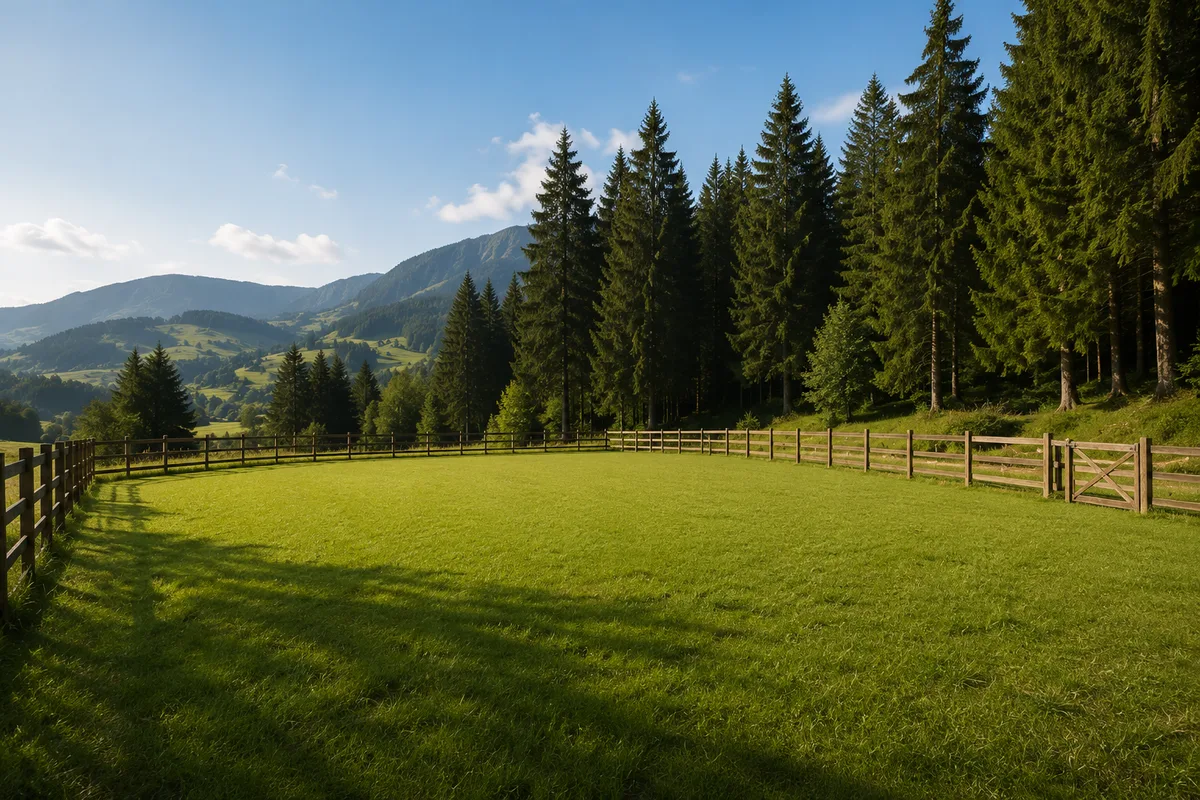
Check the height, construction, gates and possible gaps. Take into account whether your dog climbs, jumps or digs. Inspect the area again before every time you let your dog off the lead.
Animals may also be inside a fenced area. If you see birds or a cat, for example, that is not a suitable moment to simply let your dog loose. The fence does not protect animals inside the area from being chased.
If your dog remains fixated on what is outside or searches the fence for a way out, the area is not serving its purpose for you at that moment. Secure your dog and change the situation.
Activities with a clear beginning and end
Plan a small task that you can prepare in a controlled way. One example is a simple search for a familiar object: Place it visibly a short distance away while your dog stays with you. Give a familiar search cue and let your dog find the object. Then take a break.
The object does not need to be thrown far or hidden in increasingly difficult places. What matters is whether your dog can stay engaged in the task together with you. Only choose material that is safe for your dog to use and follow the site rules.
For dogs that become highly aroused by chasing, a trainer should help you choose suitable activities. A demanding hunting replacement exercise cannot be derived for every dog from a general article.
Recall remains a separate training goal
Practise recall first in situations where your dog is responsive. The first sighting of a deer is not a suitable test of whether the training already works.
Instead, plan manageable tasks: one short recall, a calm walk together and then independent exploration again on suitable ground. Note what worked well. This allows you to build on observable progress instead of guessing at the next level.
Does off lead freedom eventually need to work everywhere?
No. For some dogs, a suitable fenced area remains the most sensible long term option for movement without a held lead. That is not a personal failure. What matters is a daily routine that gives your dog opportunities while also protecting other animals and people.
Search DogOasis for a suitable dog field. Check the specific information about the fence and surroundings before choosing a field.