
Playing ball with your dog: More variety, less chasing
· 3 min read
Your dog brings the ball back and is already waiting for the next throw. It looks like endless enthusiasm. Even so, it is worth changing the routine from time to time.
Ball play is not inherently bad. What matters includes the toy, the type of movement, your dog's physical condition and whether they can disengage from the situation again. Repeated throwing is only one of many ways to use a ball.
Look at the movement pattern first
Long throws can trigger fast sprints, abrupt stops and tight turns. On slippery ground or with poor visibility, that can easily become an unsuitable task.
PDSA points out that repeated chasing and hard braking can put strain on muscles and joints. The organisation recommends appropriate ways to play and regular breaks. More information is available in the guide to safe ball games.
For young, older or physically limited dogs, you should clarify suitable levels of exercise individually. A fixed number of throws is not a universal safety rule.
The ball has to suit the dog
Choose a toy in a suitable size and check it for cracks and detachable parts. A ball that is too small or compresses dangerously can be swallowed or block the airway.
PDSA explains selection and possible risks in its guide to choosing safe ball toys. Do not let your dog continue using damaged material.
If your dog has breathing problems after play or may have swallowed parts, immediate veterinary help is required.
Three alternatives to the usual routine
Place the ball visibly on the ground
Put it on the ground a short distance away instead of throwing it. Your dog can go to it after a familiar cue. This removes the stimulus of a fast flying object.
Prepare an easy search
If your dog knows the process, you can place the ball somewhere accessible where they need to search a little more carefully. Start simply and avoid hiding places near fences, in holes or under heavy objects.
Carry it together for a few steps
Some dogs enjoy carrying a suitable object for a short distance. That does not have to lead directly to the next throw. If your dog guards toys, do not turn this into an improvised exercise in taking objects away.
All of these variations remain supervised activities. You do not need to force any of them against your dog's preferences or physical abilities.
A break is part of the game
Set yourself a manageable routine: a short activity followed by water and calm exploration. You can announce the end before your dog becomes completely overexcited.
If your dog frantically searches after the ball is put away, barks continuously or is barely responsive, look more closely at what is happening. Do not automatically extend the session with more throws.
If the behaviour becomes very fixed, a qualified professional can help you change the setup and introduce other activities.
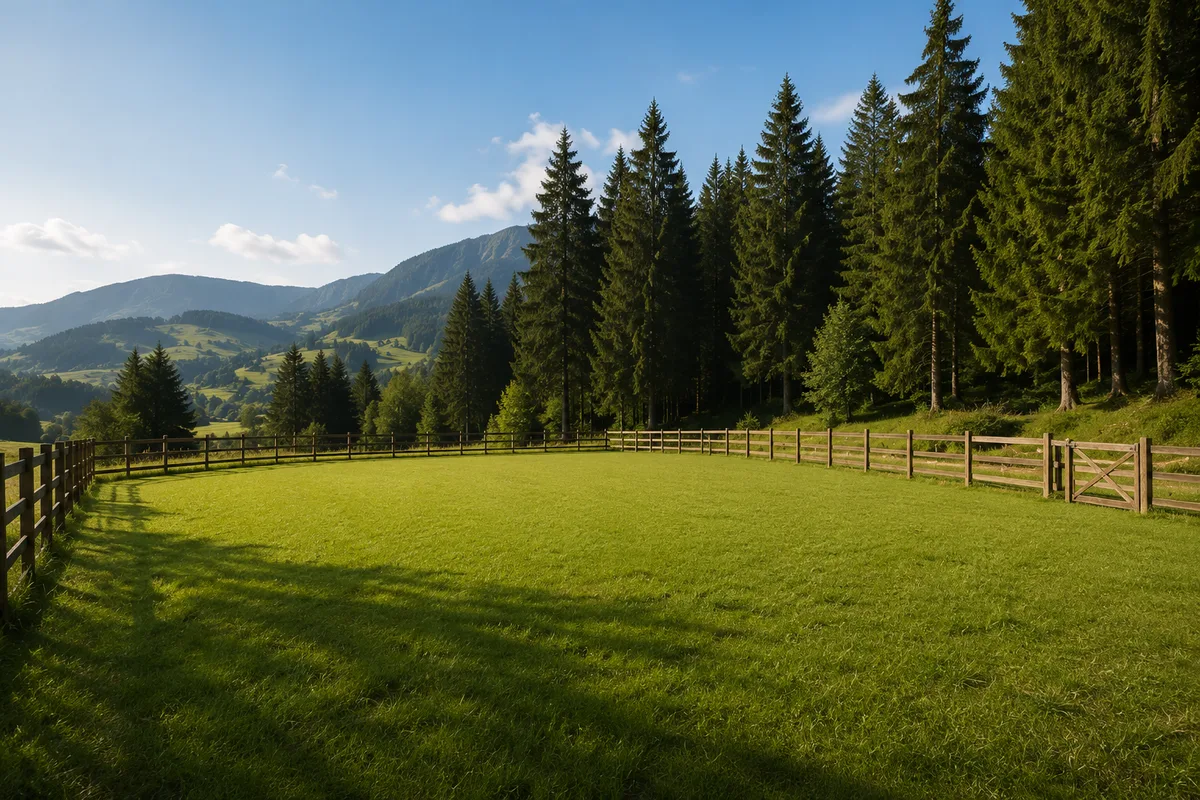
Play deliberately on a private field
Check the surface and site rules. Do not throw towards fences, gates or neighbouring animals. Exclusive use of your field does not mean a ball flying outside the boundary cannot affect anyone else.
With several dogs, competition over toys can arise. Separate activities are often easier to plan than everyone chasing together.
What makes a successful visit
Perhaps the ball is only used for a few minutes today. The rest of the time belongs to sniffing, walking together and breaks. That can make for a varied outing.
Discover suitable areas on DogOasis and plan your next visit so that it has room for more than one repeated game loop.